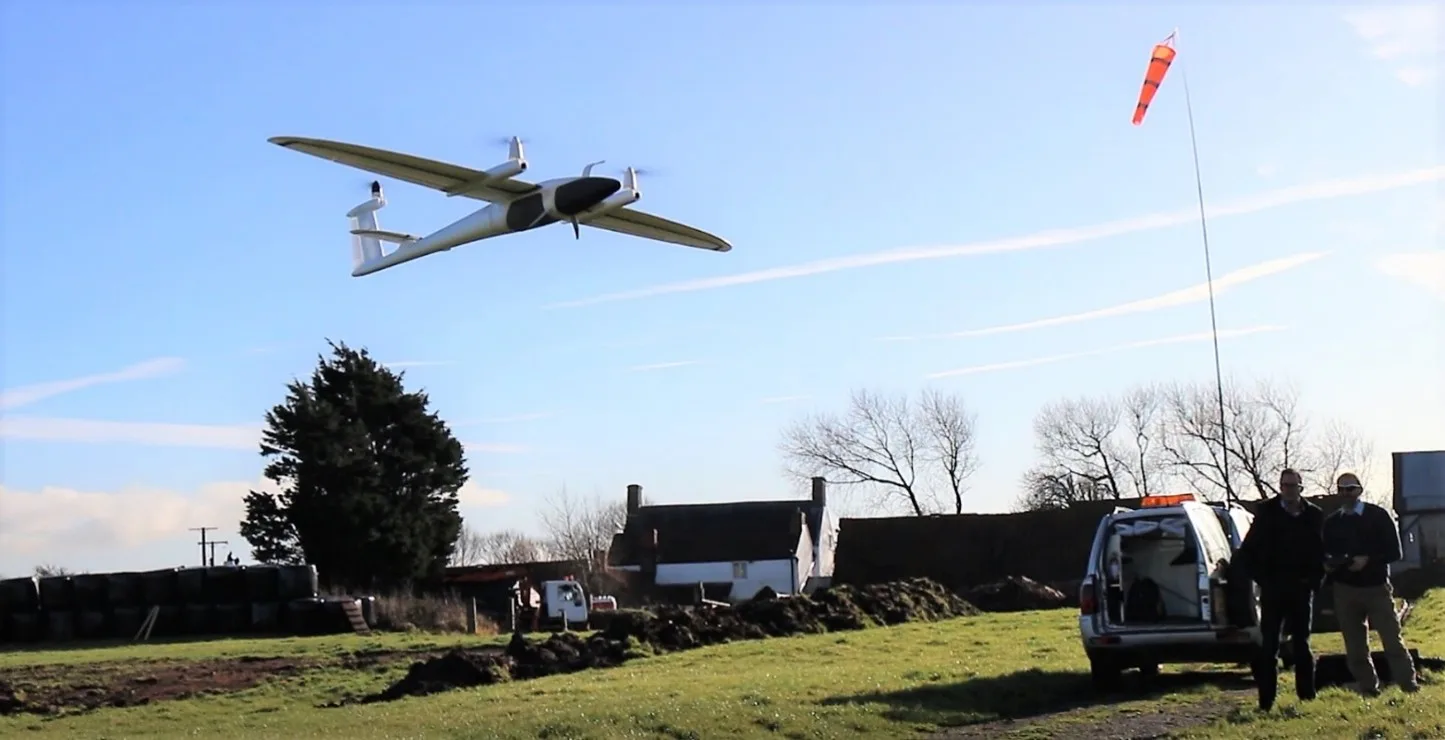
The Purpose of Project RESCUE was to test whether zero‑emission aircraft can fill critical gaps in emergency logistics and response to severe weather events.
Project RESCUE was led by Somerset Council and worked with two Drone Operators / Developer Land & Minerals Consulting and Limosaero.
Flooding is the most common environmental emergency in Somerset, with climate change expected to increase both the frequency and severity of future events. Project RESCUE examined how drones could be used to improve preparedness, support emergency response and accelerate recovery through real-time data collection, infrastructure monitoring, flood mapping and damage assessment.
The main out put of the project was to provide an outline business case to evaluate a range of service delivery models and demonstrates the potential for drone technology to improve situational awareness, enhance multi-agency collaboration, reduce operational costs and help build long-term community resilience. It also sets out a preferred approach for developing a scalable drone service that could benefit Somerset and provide a model for wider adoption
The theory was put into practice in January 2026 when the Somerset Levels flooded, with project partner Land & Minerals Consulting flew a drone over the flooded areas and captured significant amounts of data.
SWFFIZ / Somerset Council commissioned the University of Plymouth to create a Technology Adoption Roadmap exploring how emerging technologies (in drones tech and satellite applications) can help farmers and land managers across Somerset and Devon address real-world challenges, improve productivity and support environmental outcomes.
This SWFFIZ pilot explored how drones, digital asset management platforms and data analytics can help public sector organisations and housing providers inspect, monitor and manage property assets more efficiently.
A new report has identified the skills, training and talent pipeline needed to support the growth of the aerospace, aviation and advanced Future Flight technologies sector across Somerset and Devon.
Somerset Council were recently part of the Connected Places Catapult IPEC cohort looking at how to address the challenge of procurement for innovative, first of a kind services utilising drone tech and data capture.
Future Air SW brings together regional partners to unlock new zero‑carbon air mobility and aviation services across the South West, driving economic growth and connectivity. Supported by the Innovate UK Future Flight programme, it is laying the foundations for sustainable, future‑ready aviation ecosystems.